Map of Canada Provinces and Territories
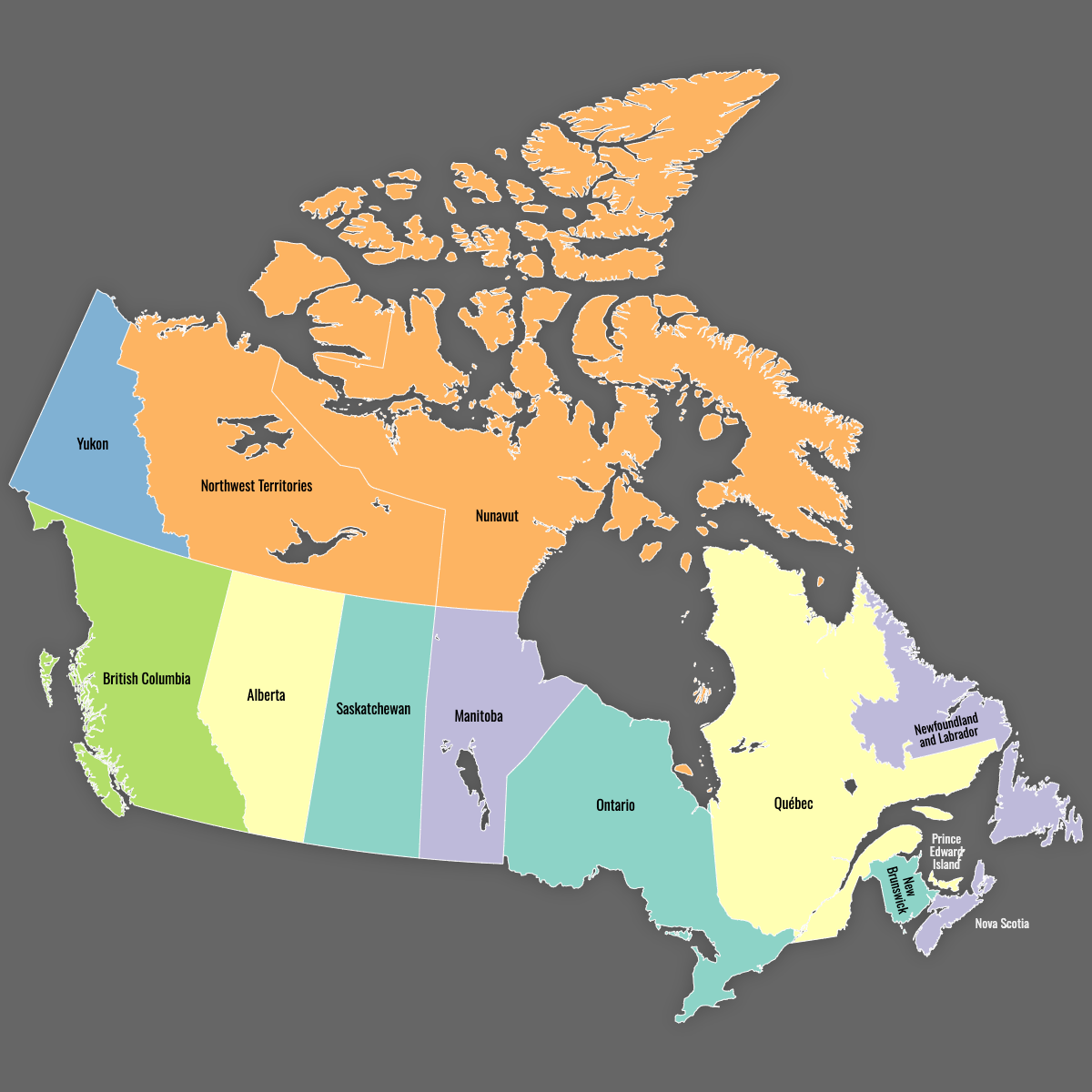
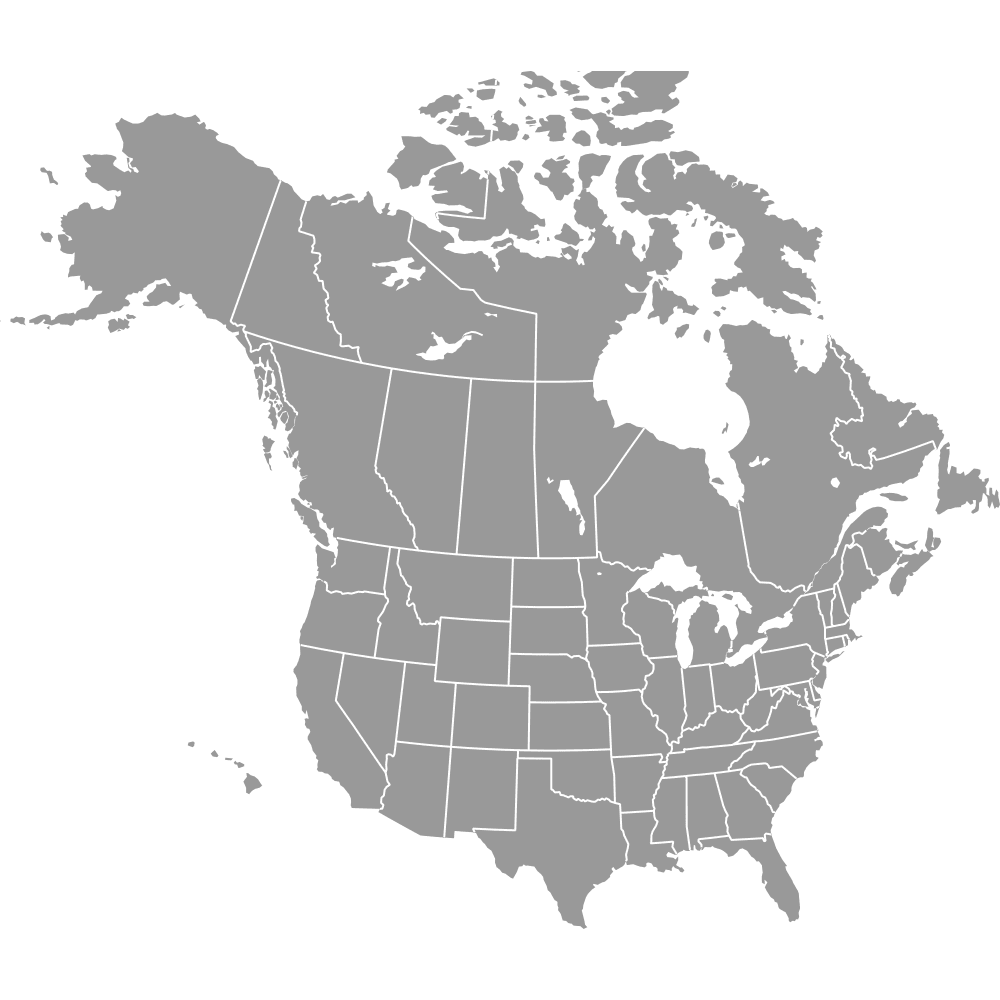
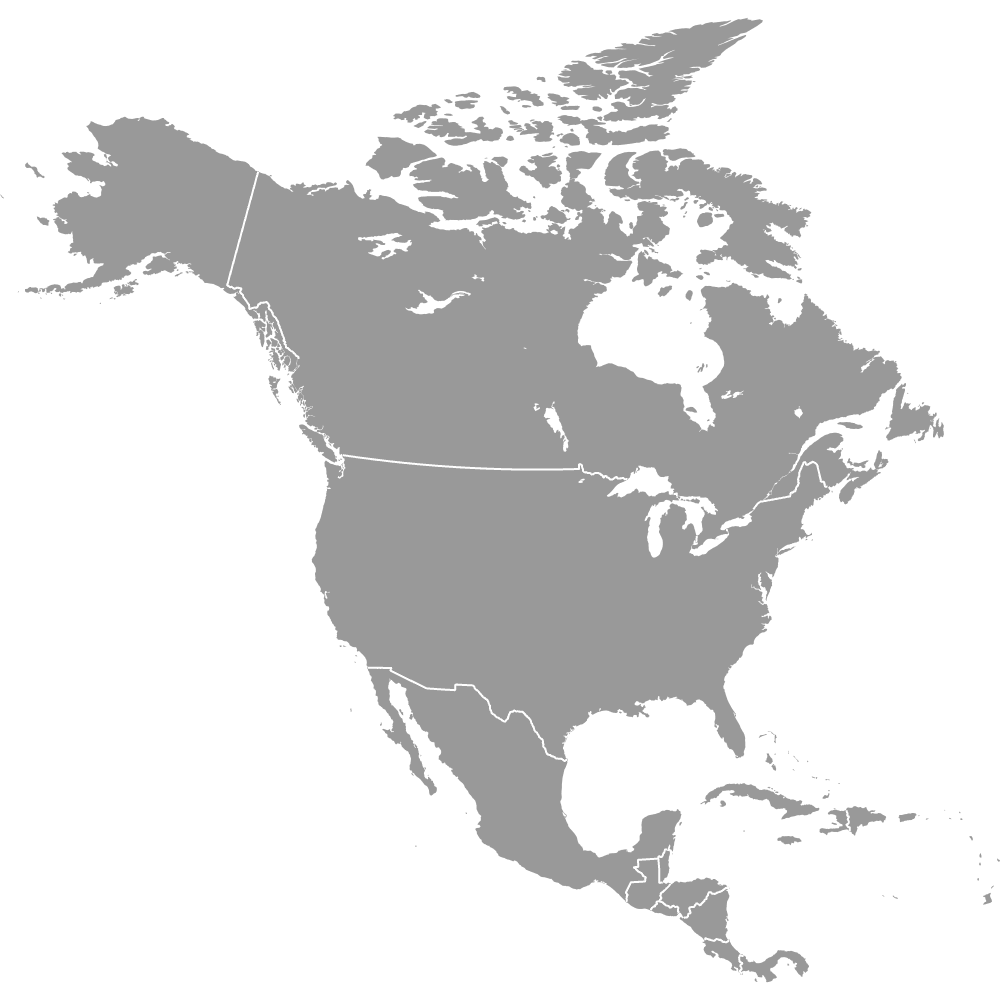
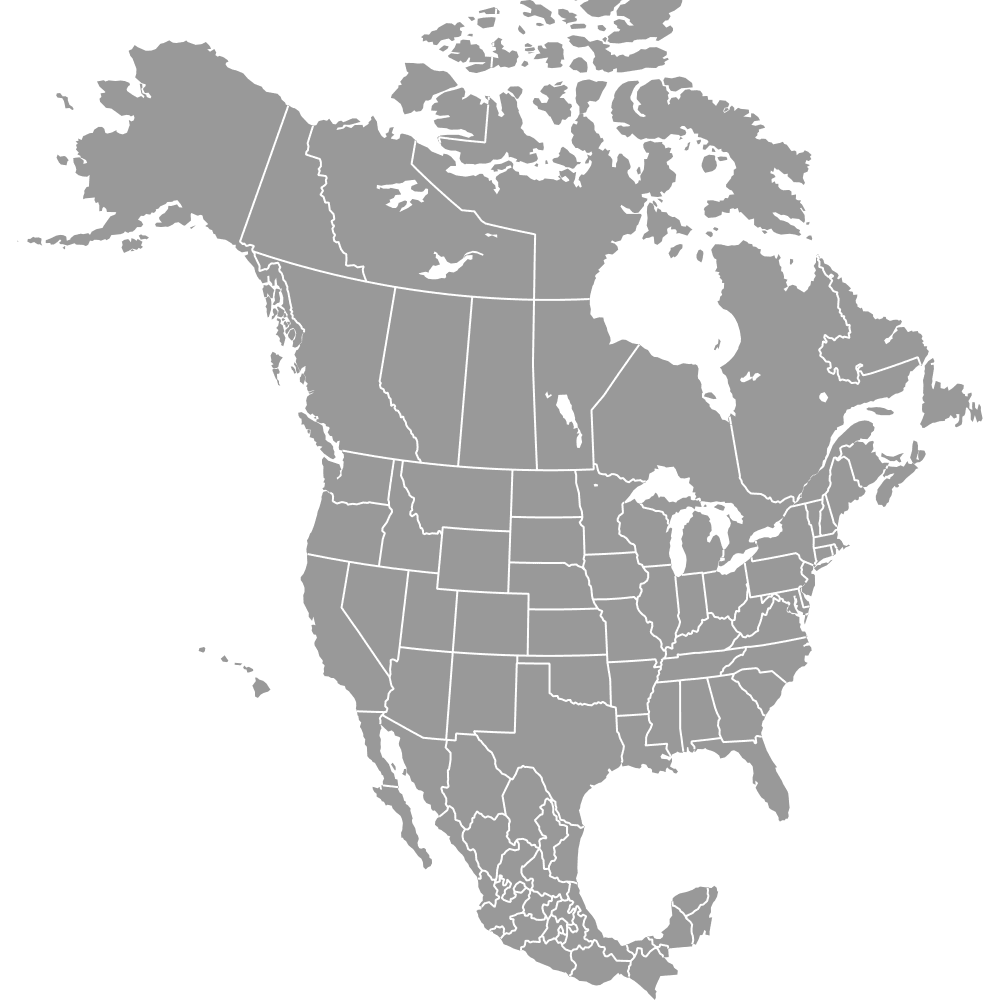
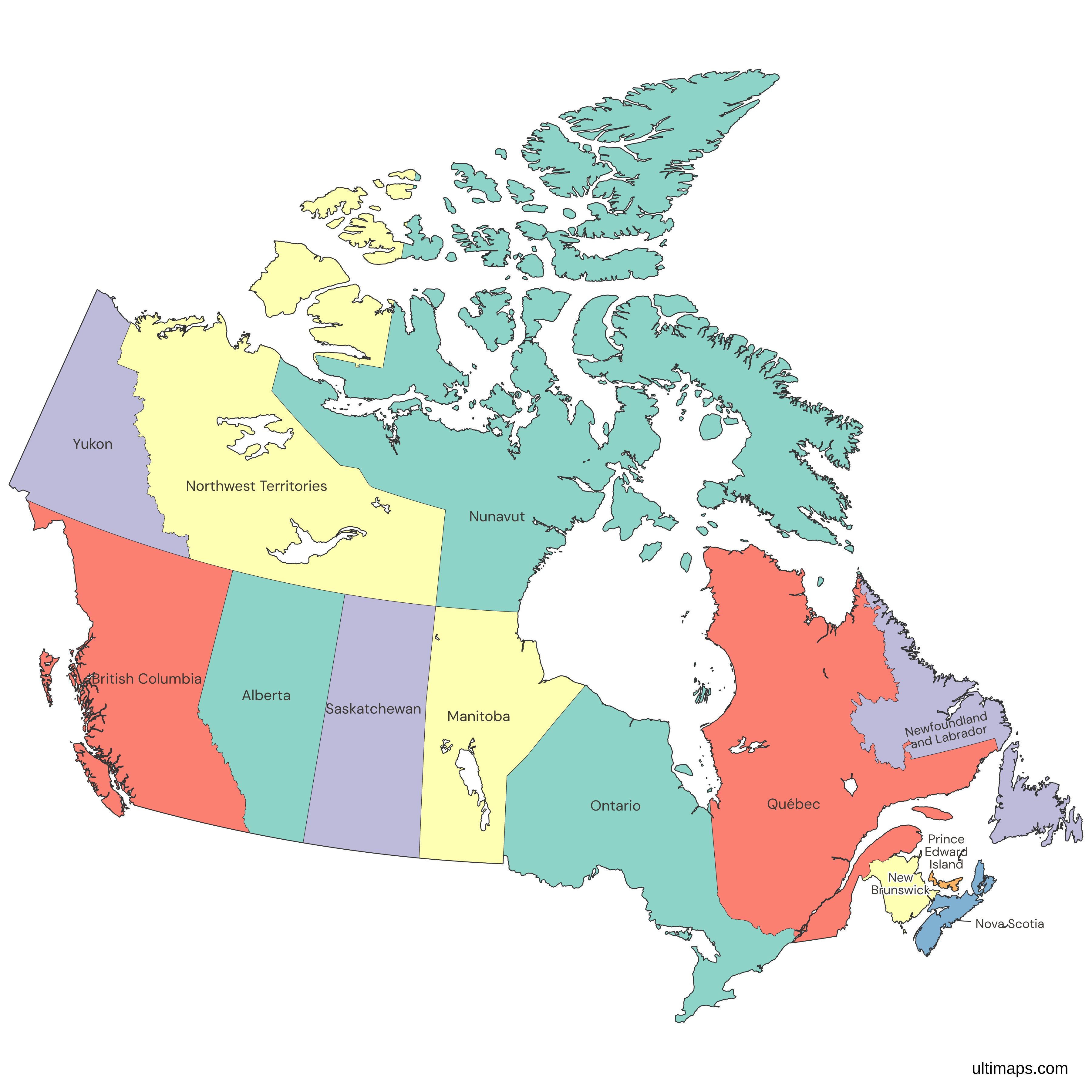
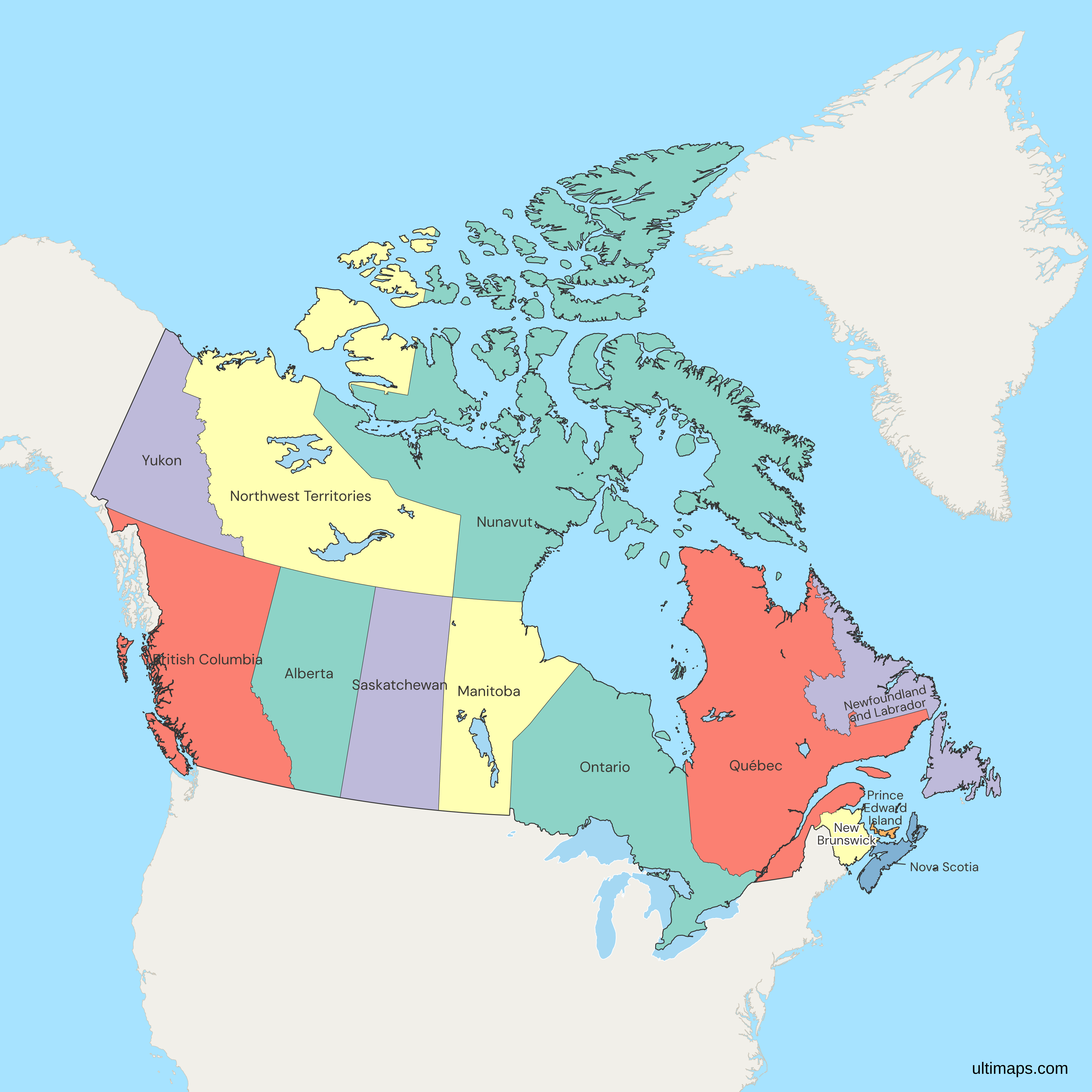
Canada is divided into 10 provinces and 3 territories, spanning 3,855,103 square miles (9,984,670 km²) from the Atlantic to the Pacific and Arctic oceans. This map of Canada's provinces and territories gives each of those 13 units its own shape, from British Columbia on the Pacific coast to Newfoundland and Labrador on the Atlantic. Ottawa, the national capital, is in Ontario. Ontario is also the most populous province, with 14,223,942 residents in the 2021 Census of Population. Nunavut has the fewest people, 36,858 (2021 Census), but it covers 2,093,190 km² (808,185 sq mi) according to Statistics Canada, more than any other province or territory.
If you count provinces alone, Québec is the largest at 1,542,056 km² (595,391 sq mi) and Prince Edward Island is the smallest at 5,660 km² (2,185 sq mi), both per Statistics Canada. The current layout dates from 1 April 1999, when Nunavut was split from the Northwest Territories. To compare the provinces with your own figures, open the map in the editor and give each region a value or a color.
Interactive Map of Canada Provinces and Territories
List of Provinces (13)
| # | Province |
|---|---|
| 1 | Alberta |
| 2 | British Columbia |
| 3 | Manitoba |
| 4 | New Brunswick |
| 5 | Newfoundland and Labrador |
| 6 | Northwest Territories |
| 7 | Nova Scotia |
| 8 | Nunavut |
| 9 | Ontario |
| 10 | Prince Edward Island |
| 11 | Québec |
| 12 | Saskatchewan |
| 13 | Yukon |
Canadian Provinces and Territories: Key Facts
- Total number of provinces: 10 provinces plus 3 territories, for 13 first-level divisions. The map on this page shows 13 regions because it includes the territories. By total area, Canada is the second-largest country in the world after Russia.
- Most populous province: Ontario (Toronto, Ottawa), 14,223,942 (2021 Census)
- Least populous province: Prince Edward Island, 154,331 (2021 Census). Nunavut, a territory, has fewer people: 36,858 (2021 Census).
- Largest by area: Nunavut, 2,093,190 km² (808,185 sq mi). Among the provinces, Québec is the largest at 1,542,056 km² (595,391 sq mi) (Statistics Canada).
- Smallest by area: Prince Edward Island, 5,660 km² (2,185 sq mi) (Statistics Canada)
- Major urban centers: Toronto, Ontario (2,794,356), Montréal, Québec (1,762,949), Calgary, Alberta (1,306,784), Ottawa, Ontario (1,017,449), Edmonton, Alberta (1,010,899), Winnipeg, Manitoba (749,607) and Vancouver, British Columbia (662,248). All figures are city populations from the 2021 Census.
- National capital: Ottawa, Ontario, 1,017,449 (2021 Census). The city is on the Ottawa River, across from Gatineau, Québec.
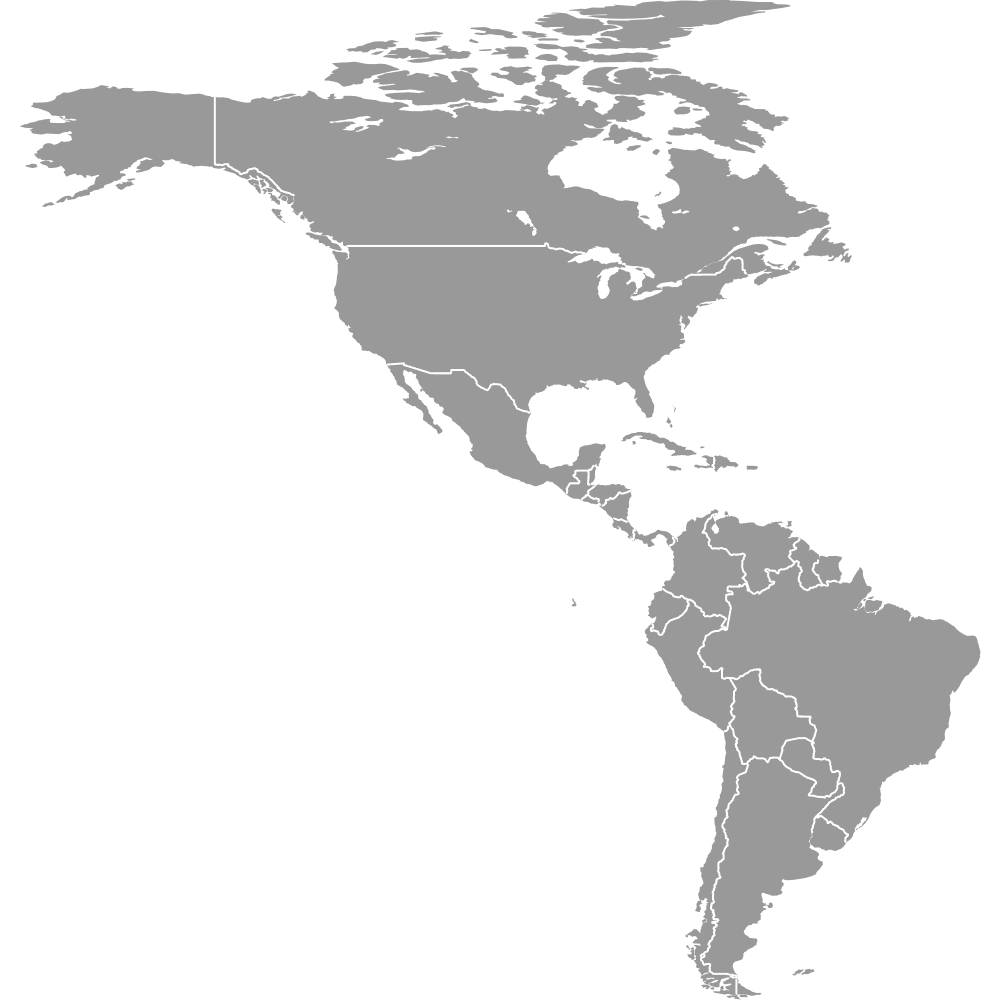
- Borders: The United States lies to the south and, through Alaska, to the northwest. The International Boundary Commission measures the border at 8,891 km (5,525 mi). US states on the land border include Washington, Idaho, Montana, North Dakota, Minnesota, New York, Vermont, New Hampshire and Maine. Michigan meets Ontario across the Great Lakes and the St. Marys, St. Clair and Detroit rivers. Ohio and Pennsylvania meet Ontario in Lake Erie. Canada has shared a short land border with Greenland on Hans Island since a 2022 agreement took effect in December 2023. The French islands of Saint Pierre and Miquelon lie off Newfoundland's south coast. Canada has coastlines on the Atlantic, Pacific and Arctic oceans.
- Time zones: Six standard zones: Pacific (UTC-8), Mountain (UTC-7), Central (UTC-6), Eastern (UTC-5), Atlantic (UTC-4) and Newfoundland (UTC-3:30)
- Official languages: English and French at the federal level. New Brunswick is the only officially bilingual province.
- Historical note: Four provinces formed Canada on 1 July 1867. Newfoundland became the 10th province on 31 March 1949, and Nunavut became the third territory on 1 April 1999.
Interesting Facts
- Atlantic Canada has four provinces: New Brunswick, Nova Scotia, Prince Edward Island, and Newfoundland and Labrador. The first three are known as the Maritime provinces.
- Newfoundland changed its official name to Newfoundland and Labrador in 2001, 52 years after it joined Canada.
- Prince Edward Island is linked to New Brunswick by the Confederation Bridge. The bridge is 12.9 km (8 mi) long and opened in 1997.
- Hudson Bay touches four provinces and territories: Nunavut, Manitoba, Ontario and Québec. The islands in the bay belong to Nunavut.
- Nunavut's total area, including lakes and rivers, is about 21 percent of Canada's 9,984,670 km².
Free Downloads
Free for personal and commercial use with a credit to Ultimaps. See the license terms for details.
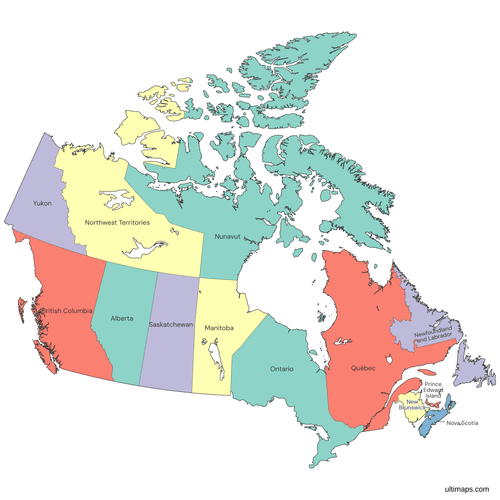 Colored Map of Canada Provinces and Territoriespng1061 KB
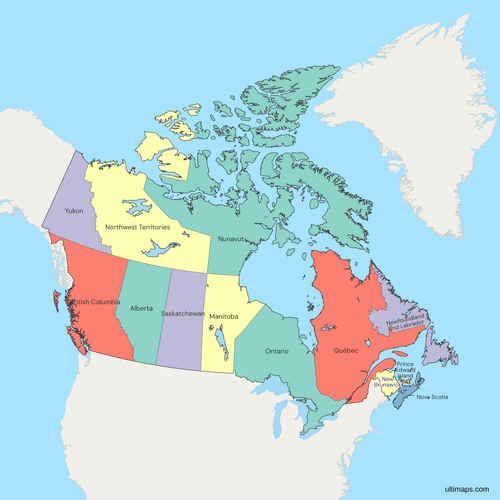 Political Map of Canada with Provincespng1307 KB
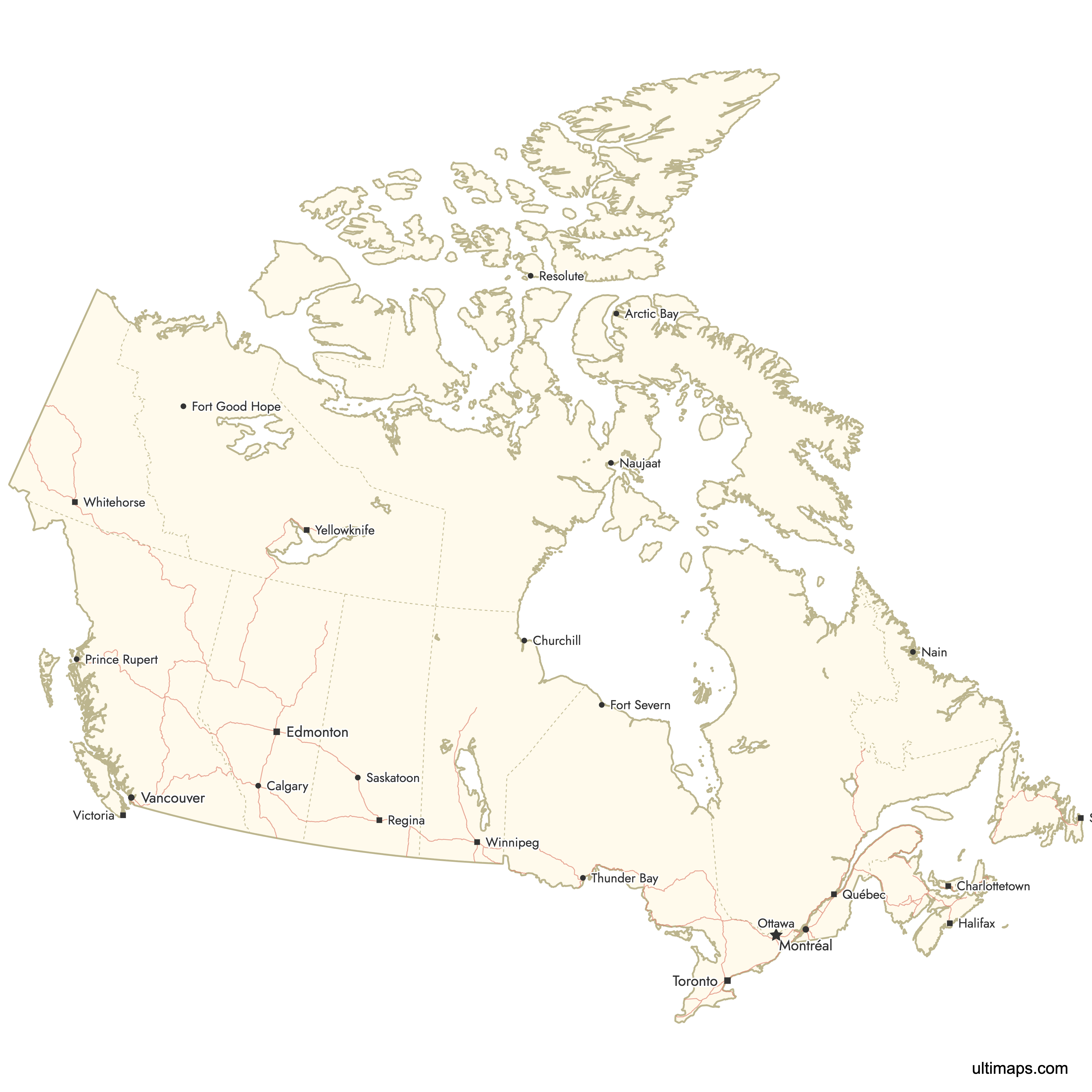
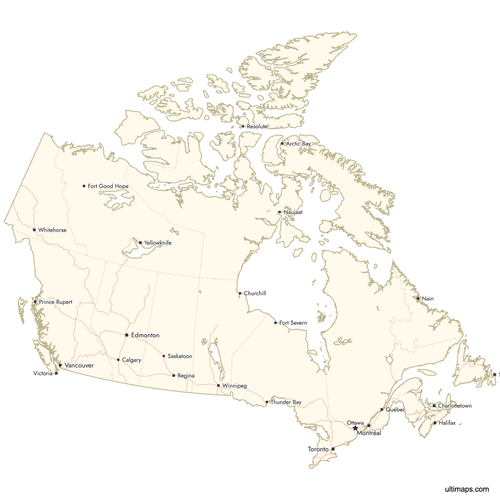 Map of Canada with Cities and Roadspng1293 KB
Need it without colors? The blank version of this map comes as a print-ready PDF (A4 and US Letter), a PNG and an editable SVG.
Custom Map Features
This map supports labels.
This map supports surrounding areas, roads, rivers and cities. New
This map is divided into 13 provinces.
Updates
Jul 25, 2025:
- Improved map quality
- Added support for surrounding areas and lakes
Oct 2, 2024:
- Changed projection and added labels to the provinces
Apr 14, 2024:
- Added map of Canada Provinces
Frequently Asked Questions
Canada has 10 provinces and 3 territories, 13 first-level divisions in total. The provinces are British Columbia, Alberta, Saskatchewan, Manitoba, Ontario, Québec, New Brunswick, Nova Scotia, Prince Edward Island, and Newfoundland and Labrador. The territories are Yukon, the Northwest Territories and Nunavut. There have been 10 provinces since Newfoundland joined on 31 March 1949. The third territory, Nunavut, was created on 1 April 1999. The map on this page draws the territories as well as the provinces, so it has 13 regions. Ontario has the most people of any province, 14,223,942 in the 2021 Census. Prince Edward Island has the fewest, 154,331 (2021 Census).
Canada does not have states. Its first-level divisions are 10 provinces and 3 territories, and they fill the role that states have in the United States. Provinces and territories differ in where their powers come from. The Constitution Act, 1867 and later amendments give the provinces their own powers, for example over education, hospitals and natural resources. Parliament cannot take these powers away without a constitutional amendment. The territories use powers that Parliament delegates to them through federal laws: the Yukon Act, the Northwest Territories Act and the Nunavut Act. Ottawa therefore has more direct control over Yukon, the Northwest Territories and Nunavut than over any province.
The capitals of Canada's 10 provinces are Victoria (British Columbia), Edmonton (Alberta), Regina (Saskatchewan), Winnipeg (Manitoba), Toronto (Ontario), Québec City (Québec), Fredericton (New Brunswick), Halifax (Nova Scotia), Charlottetown (Prince Edward Island) and St. John's (Newfoundland and Labrador). The three territorial capitals are Whitehorse (Yukon), Yellowknife (Northwest Territories) and Iqaluit (Nunavut). In several provinces, the capital is not the largest city. Vancouver is bigger than Victoria, Calgary is bigger than Edmonton, Saskatoon is bigger than Regina, Montréal is bigger than Québec City and Moncton is bigger than Fredericton. Ottawa, the national capital, is in Ontario but is not a provincial capital.
Québec is the largest province in Canada by area. It covers 1,542,056 km² (595,391 sq mi), according to Statistics Canada. If you include the territories, Nunavut is larger at 2,093,190 km² (808,185 sq mi), which makes it the largest first-level division in the country. Québec reaches from the Ottawa River and the St. Lawrence valley north to Hudson Strait. It shares land borders with Ontario, New Brunswick, and Newfoundland and Labrador, and with the US states of New York, Vermont, New Hampshire and Maine. The smallest province, Prince Edward Island, covers 5,660 km² (2,185 sq mi). Québec is about 272 times that size.
Ontario is the most populated province in Canada. Statistics Canada counted 14,223,942 residents there in the 2021 Census of Population, out of a national total of 36,991,981. Toronto is Ontario's capital and Canada's largest city, with 2,794,356 people in 2021. Ottawa, the national capital, had 1,017,449 (2021 Census). Québec is second with 8,501,833 residents (2021 Census), and its largest city, Montréal, had 1,762,949. Nunavut had the smallest population of any province or territory in 2021, at 36,858. Among the provinces, Prince Edward Island had the fewest people in the same census, with 154,331.
Canada's provinces joined Confederation on six dates. Ontario, Québec, Nova Scotia and New Brunswick formed the country on 1 July 1867. Manitoba followed on 15 July 1870, the same day the Northwest Territories came under Canadian control. British Columbia joined on 20 July 1871 and Prince Edward Island on 1 July 1873. Yukon became a separate territory on 13 June 1898. Parliament created Alberta and Saskatchewan as provinces on 1 September 1905. Newfoundland joined on 31 March 1949 as the 10th province and was renamed Newfoundland and Labrador in 2001. The most recent change came on 1 April 1999, when Nunavut was split from the Northwest Territories.
New Brunswick is the only officially bilingual province in Canada. English and French have equal status in its legislature, courts and public services, and the Canadian Charter of Rights and Freedoms has included that status since 1982. At the federal level, English and French have been the two official languages since the Official Languages Act of 1969. Québec has one official language, French, under the Charter of the French Language, passed in 1977. The territories have their own laws on language. The Northwest Territories recognize 11 official languages. In Nunavut, the Inuit language is official together with English and French.
Canada has six standard time zones. From west to east, they are Pacific (UTC-8), Mountain (UTC-7), Central (UTC-6), Eastern (UTC-5), Atlantic (UTC-4) and Newfoundland (UTC-3:30). Newfoundland Time is offset by half an hour and is used on the island of Newfoundland and in southeastern Labrador. Some provinces and territories use more than one zone. Ontario uses Eastern and Central time, and Nunavut uses Eastern, Central and Mountain time. Most of Saskatchewan stays on Central Standard Time all year and does not move its clocks in spring. Yukon has stayed on UTC-7 all year since November 2020.
A custom map of Canada starts with the 13-region map at the top of this page. It opens in a free browser editor, and you do not need an account. For a category map, such as the four Atlantic provinces compared with the three Prairie provinces, choose a fill color for each region. For a data map, enter one number per province or territory, for example 2021 Census population, and the regions are colored on a scale with a legend. The free plan exports a standard PNG with a small Ultimaps credit. Pro adds SVG, PDF and high-resolution PNG.