Philippines Map with Regions
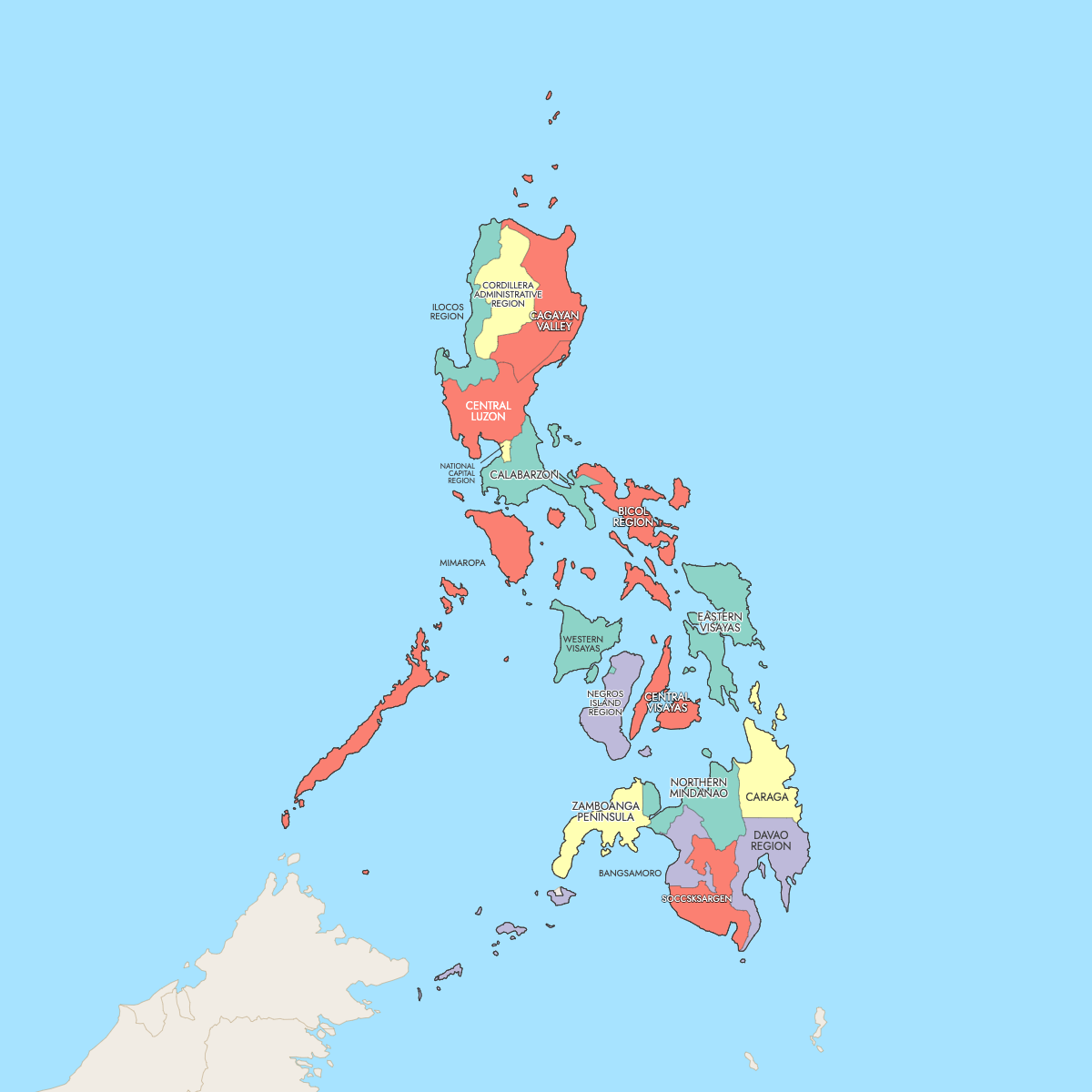
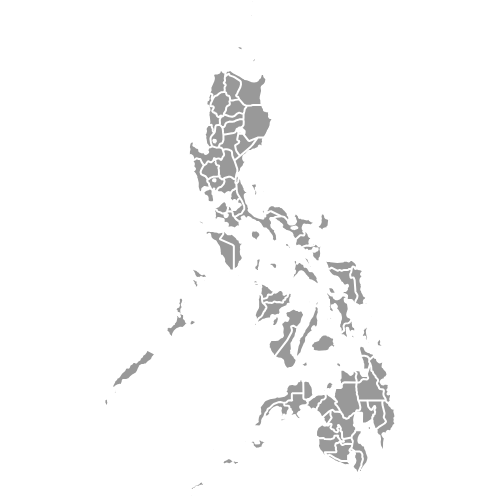
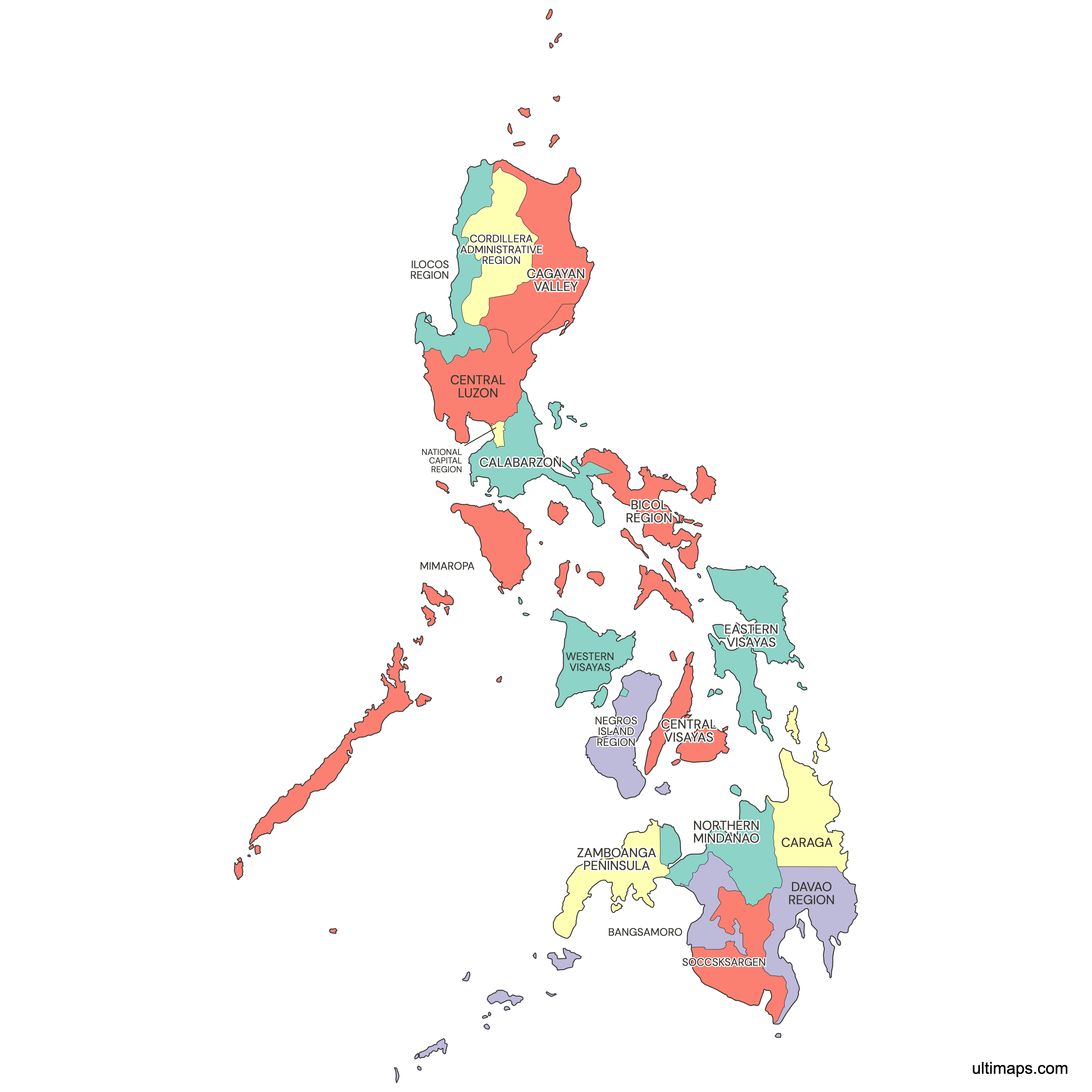
This map of the Philippines is divided into 18 administrative regions, 8 in Luzon, 4 in the Visayas and 6 in Mindanao. Regions group the country's 82 provinces and its cities for administration and statistics, and the Philippine Statistics Authority counts 18 of them as of 30 June 2024. The total moved from 17 to 18 on 13 June 2024, when Republic Act 12000 re-established the Negros Island Region out of Negros Occidental, Negros Oriental and Siquijor. Maps that still show 17 predate that law, and much older ones label the Muslim Mindanao area ARMM instead of BARMM, which took its place in 2019.
Calabarzon (Region IV-A) is the most populous region with 16,195,042 residents (2020 Census). The National Capital Region counted 13,484,462 in 2020 and 14,001,751 at the PSA's 2024 Census of Population, all within 636.00 km² (245.56 sq mi, PSA figures), the smallest regional area in the country. NCR holds Manila, the national capital, and Quezon City, whose 2,960,048 residents (2020 Census) make it the largest city in the Philippines. MIMAROPA is the largest region by area at 29,620.90 km² (11,436.69 sq mi, PSA figures), with Cagayan Valley (Region II) second at 28,228.83 km² (10,899 sq mi) in northeastern Luzon. Every province resolves to exactly one region on this map, worth confirming before any regional analysis. When the geography is settled, produce the version you need, whether that is paper-ready and empty or shaded by regional statistics.
Interactive Philippines Map with Regions
List of Regions (18)
Philippines Regions: Key Facts
- Total number of regions: 18 as of 30 June 2024, arranged as 8 in Luzon, 4 in the Visayas and 6 in Mindanao
- Most populous region: Calabarzon (Region IV-A), 16,195,042 (2020 Census) rising to 16,933,234 at the 2024 Census of Population, administered from Calamba City
- Second most populous: National Capital Region, 13,484,462 (2020 Census), 14,001,751 at the 2024 Census of Population
- Least populous region: Cordillera Administrative Region, 1,797,660 (2020 Census; 1,808,985 in 2024), the only region below 2 million
- Largest region by area: MIMAROPA, 29,620.90 km² (11,436.69 sq mi, PSA figures), ahead of Cagayan Valley (Region II) at 28,228.83 km² (10,899 sq mi)
- Smallest region by area: National Capital Region, 636.00 km² (245.56 sq mi, PSA figures)
- Regions with major urban centers: NCR (Manila, Quezon City), Central Visayas (Cebu City), Davao Region (Davao City), Northern Mindanao (Cagayan de Oro), Western Visayas (Iloilo City), Cordillera (Baguio), Zamboanga Peninsula (Zamboanga City), plus the Central Luzon and Calabarzon corridors around the capital
- Capital: Manila, the national capital and the regional center of NCR, which is the only region containing no provinces
- Borders: none by land. The archipelago meets the Luzon Strait toward Taiwan in the north, the South China Sea (West Philippine Sea) and Vietnam to the west, the Philippine Sea and the open Pacific to the east, and the Sulu and Celebes seas toward Malaysia and Indonesia in the south. See the country in context on the Asia countries map
- Time zone: Philippine Standard Time (PHT), UTC+8, with no daylight saving
- Boundaries last changed: 2024-2025. Republic Act 12000 created the Negros Island Region on 13 June 2024, and a September 2024 Supreme Court ruling moved Sulu out of BARMM into Zamboanga Peninsula, effective 2025
Interesting Facts
- Some regions are numbered and some are not. Region I (Ilocos) through Region XIII (Caraga) carry roman numerals, while NCR, CAR, MIMAROPA, BARMM and the Negros Island Region go by name alone. Three names are acronyms of their provinces: Calabarzon (Cavite, Laguna, Batangas, Rizal, Quezon), MIMAROPA (Mindoro, Marinduque, Romblon, Palawan) and Soccsksargen (South Cotabato, Cotabato, Sultan Kudarat, Sarangani, General Santos).
- The Negros Island Region has been created twice. Executive Order 183 set it up in 2015, Executive Order 38 abolished it in 2017, and Republic Act 12000 brought it back on 13 June 2024.
- NCR's density works out to roughly 22,000 people per km², using its 2024 population of 14,001,751 over 636.00 km².
- Batanes, the northernmost province, sits inside Cagayan Valley yet lies closer to Taiwan than to the Luzon mainland.
- The 18 regions cover 82 provinces in total. If you need that level of detail, use the Philippines provinces map instead.
Free Downloads
Free for personal and commercial use with a credit to Ultimaps. See the license terms for details.
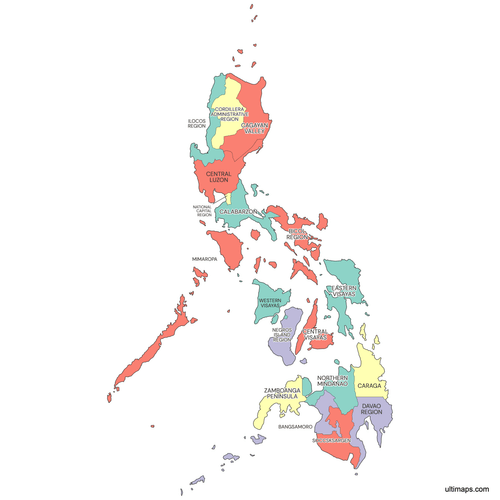 Colored Philippines Map with Regionspng781 KB
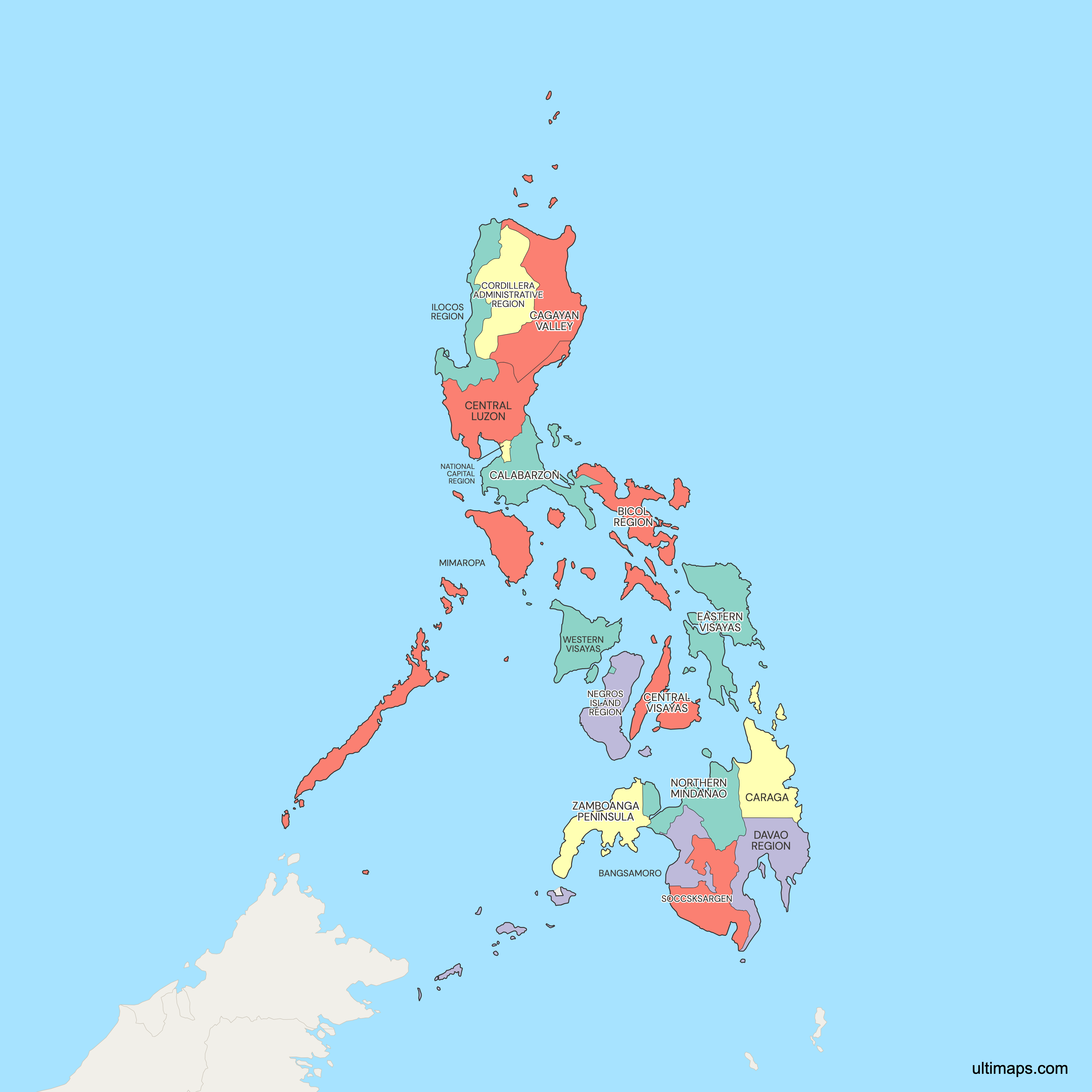
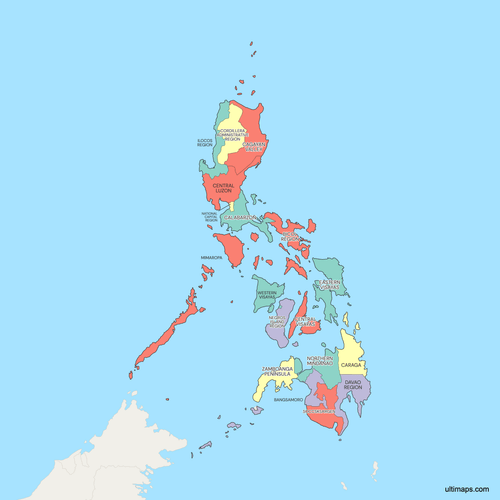 Political Map of the Philippines with Regionspng761 KB
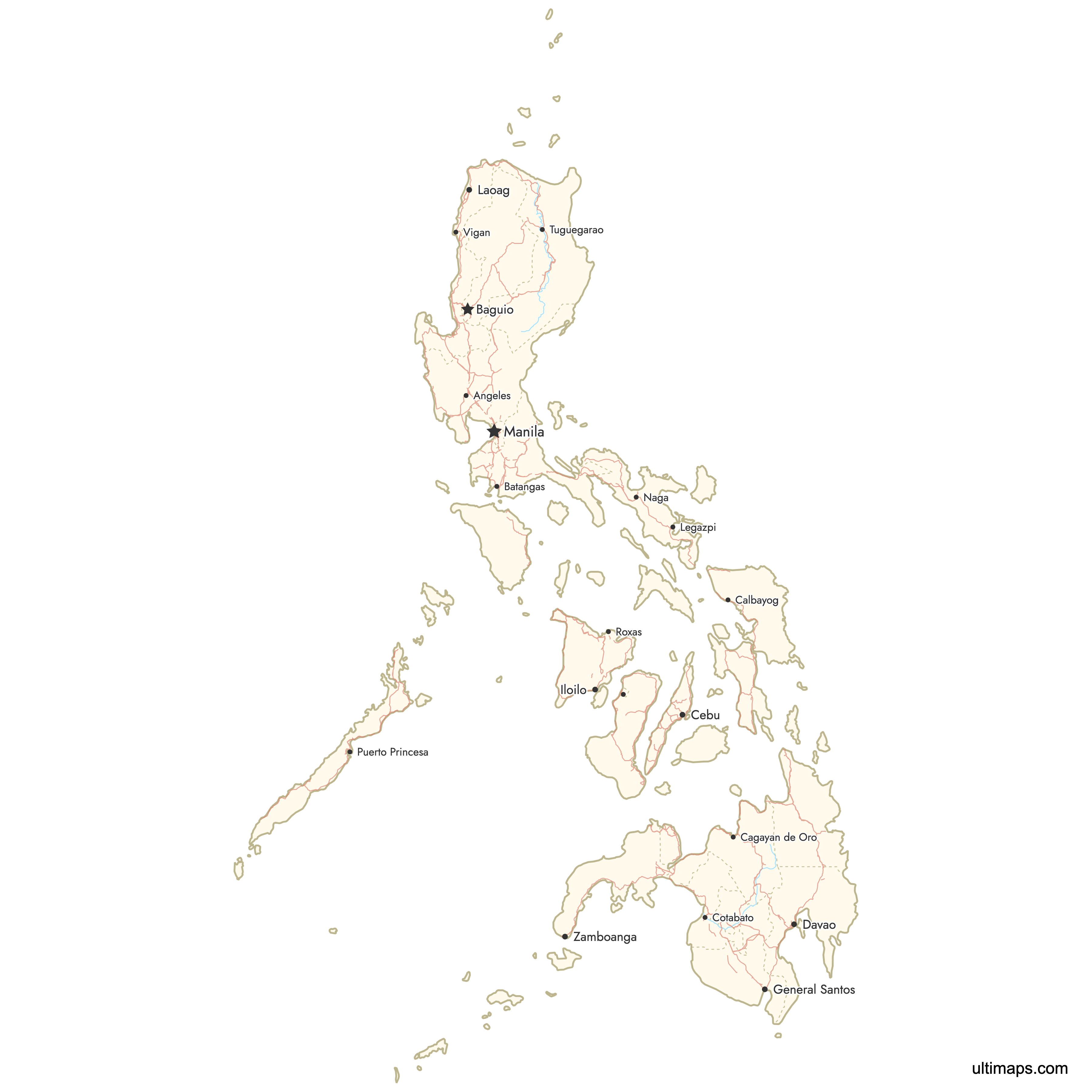
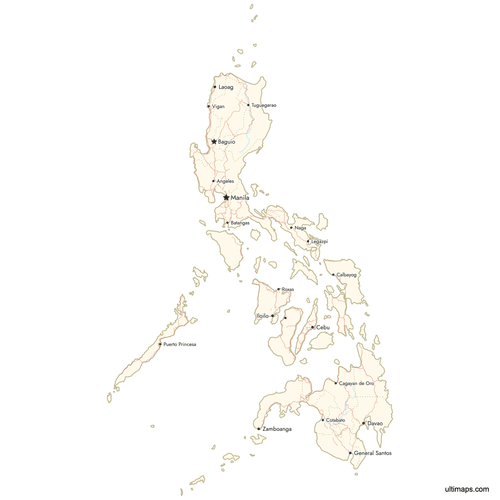 Map of the Philippines with Cities and Roadspng832 KB
Need it without colors? The blank version of this map comes as a print-ready PDF (A4 and US Letter), a PNG and an editable SVG.
Custom Map Features
This map supports labels.
This map supports surrounding areas, roads, rivers and cities. New
This map is divided into 18 regions.
Updates
Apr 23, 2026:
- Added map of the Philippines Regions with surrounding countries, cities and roads
Frequently Asked Questions
The Philippines has 18 administrative regions as of 30 June 2024, according to Philippine Statistics Authority listings. They break down as 8 regions in Luzon, 4 in the Visayas and 6 in Mindanao, and together they cover the country's 82 provinces. Regions are grouping units rather than local governments, so most of them have no legislature of their own and exist to organize provinces, cities and national agency offices. BARMM is the exception, with an elected regional parliament. The National Capital Region is the only region that contains no provinces at all, holding 16 cities and one municipality instead.
Maps of the Philippines showing 17 regions were drawn before 13 June 2024, the date President Ferdinand Marcos Jr. signed Republic Act 12000 and created the Negros Island Region from Negros Occidental, Negros Oriental and Siquijor. That lifted the count from 17 to 18. The region had existed once before, established by Executive Order 183 in 2015 and abolished by Executive Order 38 in 2017, which is why some older references show 18 as well. A separate change, BARMM replacing the Autonomous Region in Muslim Mindanao in 2019, renamed and restructured a region without changing the total.
MIMAROPA, the Southwestern Tagalog Region, is the largest Philippine region by area at 29,620.90 km² (11,436.69 sq mi, PSA figures). Its name abbreviates the island provinces it contains: Mindoro (Occidental and Oriental), Marinduque, Romblon and Palawan. Second by area is Cagayan Valley (Region II) at 28,228.83 km² (10,899 sq mi), covering the northeastern corner of Luzon with Tuguegarao as its regional center. Palawan alone stretches most of the way to Borneo, which is a large part of MIMAROPA's extent. The smallest region, by contrast, is the National Capital Region at just 636.00 km² (245.56 sq mi, PSA figures).
Calabarzon (Region IV-A) is the most populous region in the Philippines, with 16,195,042 residents at the 2020 Census and 16,933,234 at the PSA's 2024 Census of Population. It sits directly south of Metro Manila and covers Cavite, Laguna, Batangas, Rizal and Quezon, administered from Calamba City. The National Capital Region ranks second, counted at 13,484,462 in 2020 and 14,001,751 in 2024, and it is far denser than anywhere else since that population fits into 636.00 km² (245.56 sq mi). Central Luzon follows in third place. The least populated is the Cordillera Administrative Region, at 1,797,660 people in 2020.
The Philippines is grouped into three island groups: Luzon, the Visayas and Mindanao. Luzon in the north holds 8 regions, namely NCR, the Cordillera Administrative Region, Ilocos, Cagayan Valley, Central Luzon, Calabarzon, MIMAROPA and Bicol. The Visayas in the center holds 4, which are Western Visayas, Central Visayas, Eastern Visayas and the Negros Island Region added in 2024. Mindanao in the south holds 6, namely Zamboanga Peninsula, Northern Mindanao, Davao Region, Soccsksargen, Caraga and BARMM. The island groups are not an administrative tier themselves, but nearly every published map and dataset orders the 18 regions this way.
BARMM, the Bangsamoro Autonomous Region in Muslim Mindanao, is the only Philippine region with its own elected government. It replaced the Autonomous Region in Muslim Mindanao in 2019 after the Bangsamoro Organic Law was ratified in plebiscites held that January and February. BARMM runs a regional parliament and a chief minister and holds legislative and fiscal powers the other 17 regions do not have, since those function as administrative and statistical groupings. In 2024 the Supreme Court ruled that Sulu is not part of BARMM, because the province had voted against the Bangsamoro Organic Law in the ratification vote.
Philippine regions mix numbers and names because the system was built up in stages. The original set from the 1972 reorganization was numbered, and Region I (Ilocos) through Region XIII (Caraga) still carry roman numerals alongside their names. Units created later were given names only: the National Capital Region, the Cordillera Administrative Region, BARMM and the Negros Island Region. The 2002 split of Region IV produced Calabarzon (Region IV-A) and MIMAROPA (then Region IV-B), and MIMAROPA dropped its number in 2016 under Republic Act 10879, leaving Calabarzon the only region with a letter. Three regions go by acronyms of their member provinces, Calabarzon, MIMAROPA and Soccsksargen, and official documents use the numbers and names interchangeably.
Cebu is in Central Visayas, also written as Region VII, with Cebu City serving as the regional center. Cebu City recorded 964,169 residents at the 2020 Census and anchors Metro Cebu, the second largest metropolitan area in the Philippines after Metro Manila. Central Visayas has been smaller since June 2024, when Negros Oriental and Siquijor moved into the new Negros Island Region, leaving Cebu and Bohol as the region's provinces. Negros Occidental left Western Visayas in the same reorganization. If your dataset predates 2024, check which region it assigns those three areas to before mapping it.
Turning this Philippines map into your own version takes only the page itself, since the free tier works without registration. Regional figures do the heavy part automatically: supply 18 values and the archipelago becomes a choropleth, dark where the numbers concentrate. Alternatively, emphasis can be applied by hand, with Bicol or Davao Region singled out in a color no other unit uses. Adjustments to boundaries, backgrounds and label text follow naturally, annotated pins settle on Manila, Cebu City or a reef located by coordinates, and the final artwork ships as PNG, PDF or SVG.